
Argyll Energy Development Ltd

What We Do
Argyll Energy Development develops and delivers intelligent energy infrastructure through a trusted network of engineering, technology and infrastructure partners.
We design, integrate and oversee complete energy ecosystems that combine generation, storage, distribution, control and digital infrastructure into a single operational platform.
Rather than supplying individual products, we assemble best-of-breed technologies into resilient infrastructure solutions tailored to each customer's operational requirements.
Delivery
Solutions are delivered in partnership with specialist engineering and technology providers selected to meet the technical and commercial requirements of each project.
Typical Argyll Modular AI Unit Deployment Architecture
Indicative Technical Specification
Component
AI Compute
Communications
Cooling
Power Distribution
Primary Electrical Supply
Secondary Electrical Supply
Standby Generation
Battery Storage
Management
Communications
Every Argyll deployment is engineered around the customer's operational, resilience and site-specific requirements. Rather than providing a fixed product, we develop integrated infrastructure solutions that combine AI compute, energy systems and resilient engineering into a single deployment.
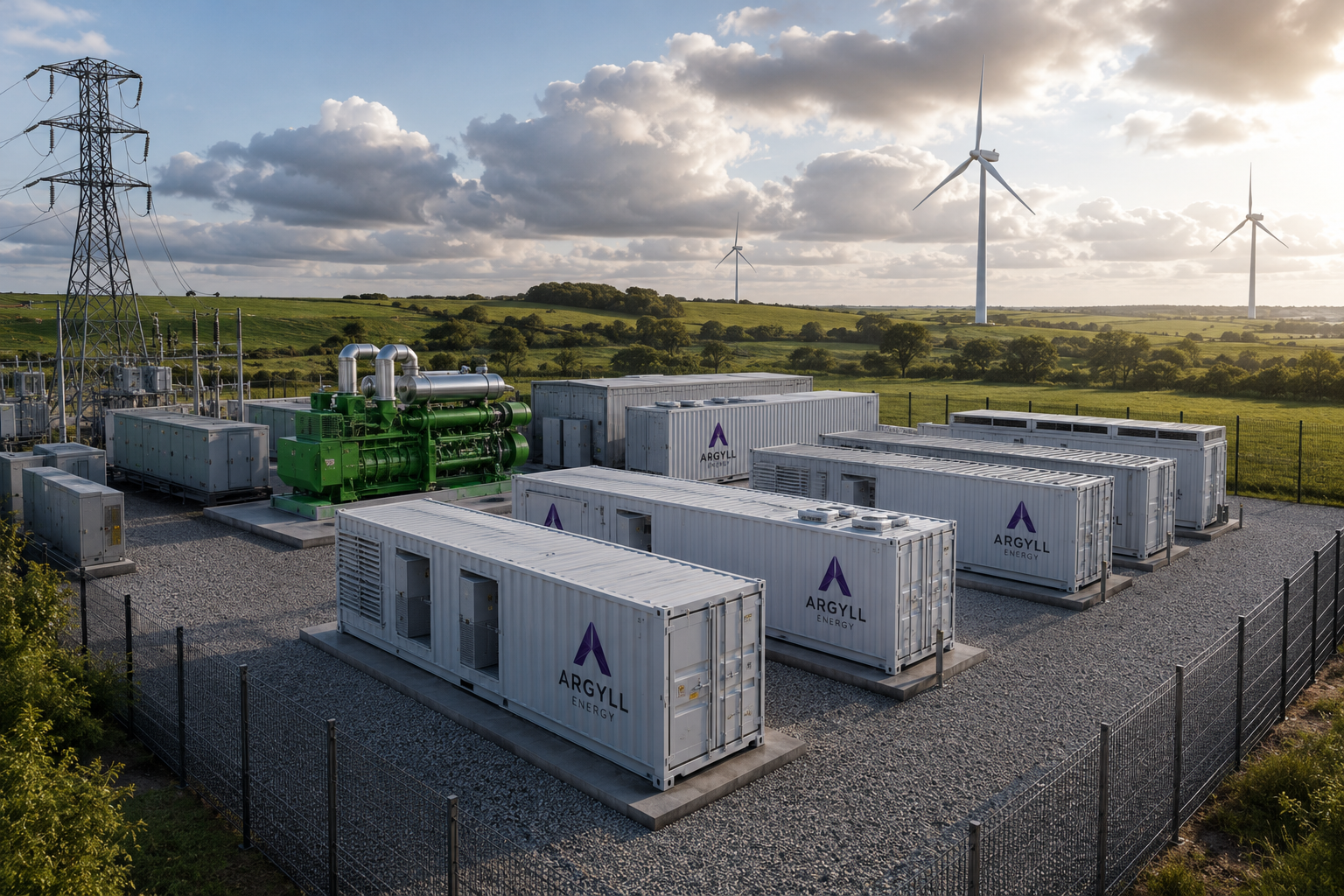
The illustration shows a representative deployment comprising one or more Argyll Modular AI Units (AMAUs) integrated with grid infrastructure, renewable generation, battery energy storage and optional standby generation. Each deployment is engineered to meet the customer's operational, resilience and site-specific requirements.
Indicative Configuration
AI Compute10 × SambaNova SN16-40 AI Units
1 × Communications & Service Rack (CSR)
Integrated precision cooling system
Integrated dual PDU architecture
Grid connection
Renewable energy supply
Optional gas engine temporary/standby generation
BESS where specified
Module Management System (MMS)
Dual independent fibre connections where available
The above specification illustrates a typical deployment. Final equipment selection, capacities, resilience levels and site layouts are determined during the engineering design process to meet customer operational requirements and applicable standards.

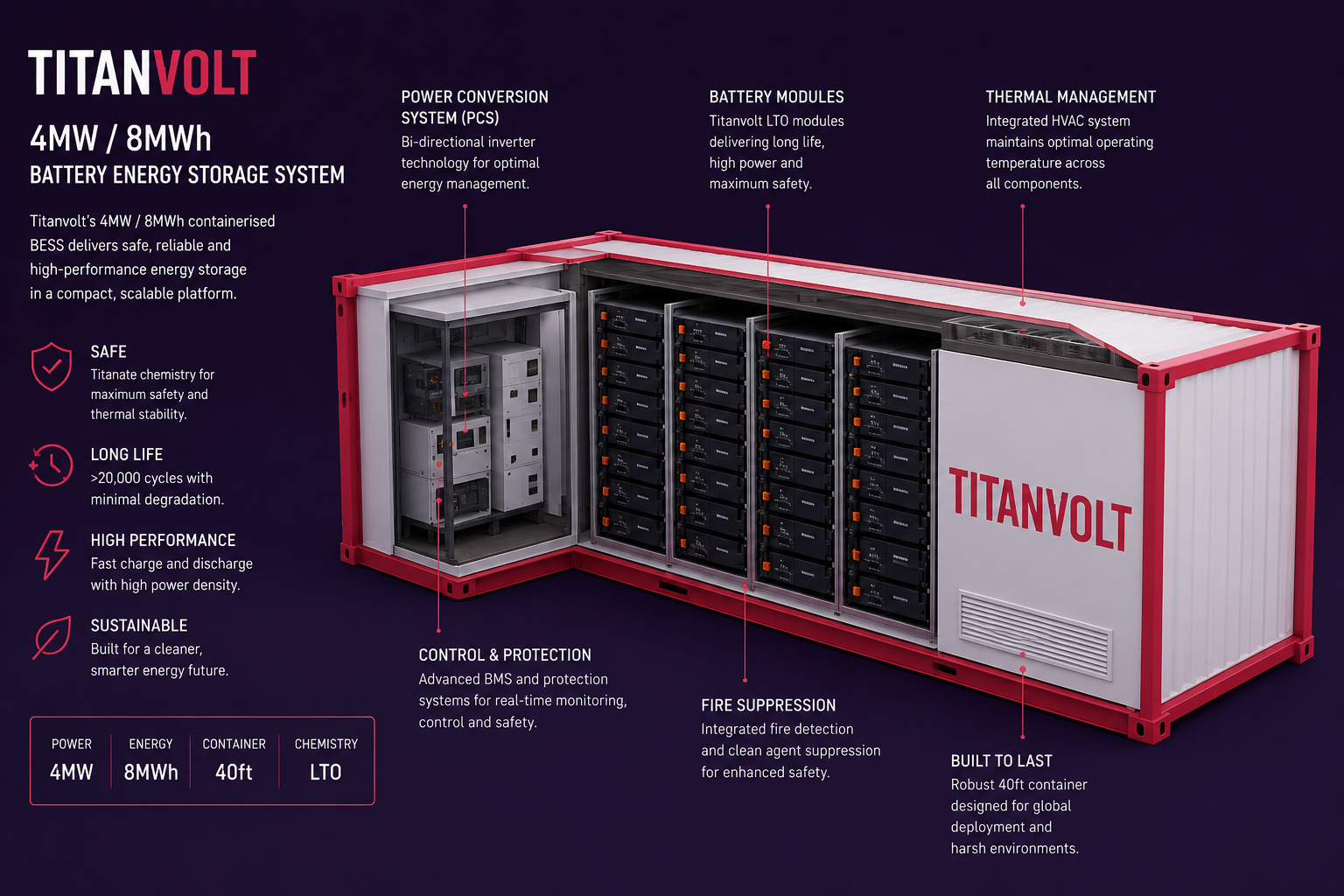
Illustration shown for indicative purposes only. Equipment configuration, layout and appearance may vary according to customer requirements and engineering design.
Titanvolt is a key delivery partner supporting Argyll Energy Development's Battery Energy Storage System (BESS) capability. Titanvolt BESS solutions are incorporated into Argyll Modular AI Unit (AMAU) deployments to provide intelligent energy management, storing electricity generated from renewable sources such as wind and solar, improving resilience, optimising energy utilisation and supporting continuity of operations.
Microgrid Energy Management System
Argyll Energy Development designs and delivers intelligent microgrid solutions that integrate multiple energy sources, storage technologies and electrical loads into a single coordinated energy ecosystem. Whether providing a new energy system or integrating with existing electrical infrastructure, our approach is focused on improving resilience, operational efficiency and long-term sustainability.
Our microgrid solutions can combine grid connectivity, renewable generation, Battery Energy Storage Systems (BESS), standby generation and advanced energy management technologies to optimise the generation, storage and distribution of electrical power. By intelligently balancing energy demand with available generation and storage capacity, we help customers reduce energy costs, improve resilience and maximise the value of their energy assets.
Every deployment is engineered around the customer's operational requirements and can be designed to operate as a standalone energy system or seamlessly integrate with existing electrical infrastructure, supporting future expansion as operational needs evolve. This reflects the wider design philosophy of modular infrastructure that is renewable ready and capable of integrating generation, storage and intelligent energy management over time.
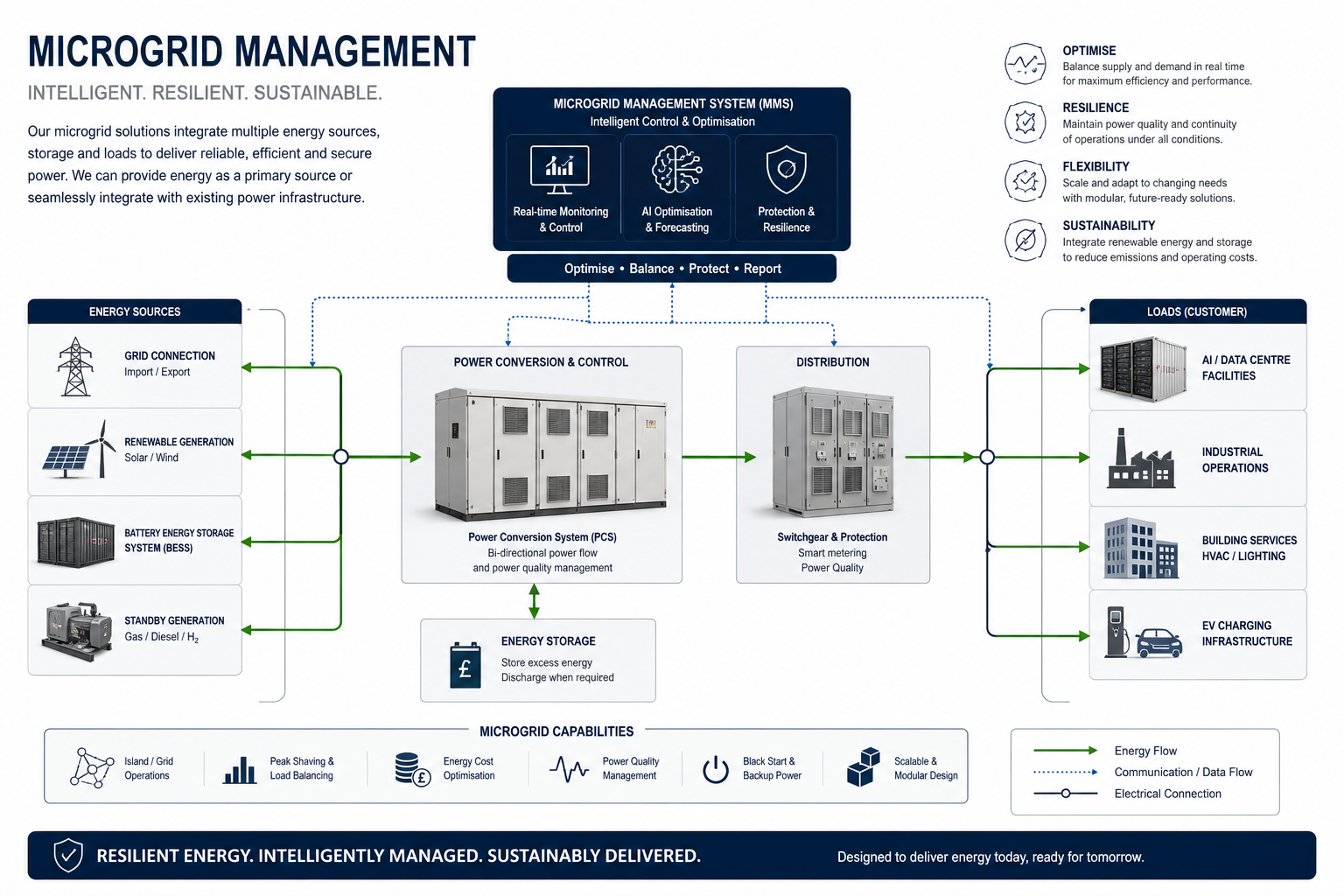
Indicative microgrid architecture. Final system configuration will depend on site conditions, existing infrastructure, operational requirements and detailed engineering design.